
Brañosera lo ha conseguido
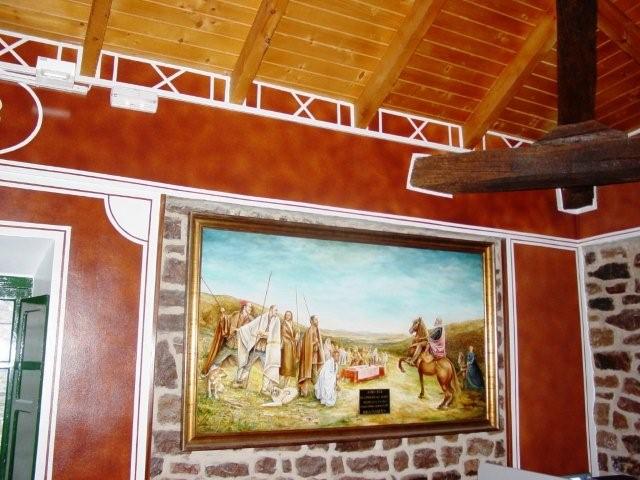
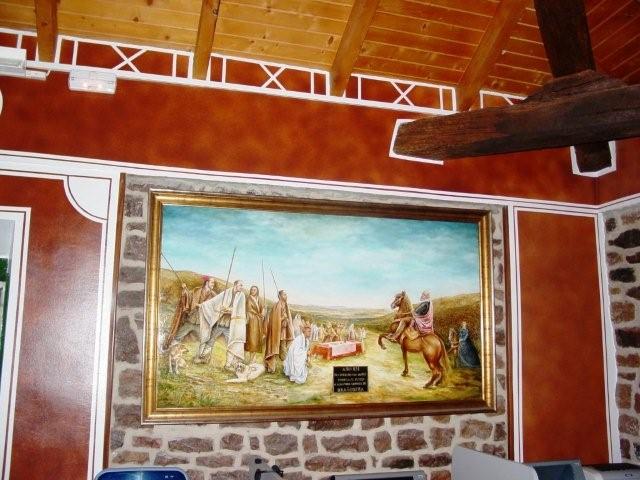
El pasado 28 de septiembre de 2.018, esta pequeña localidad del norte de la provincia de Palencia, fue reconocida por el Congreso como el primer tipo de organización entre pobladores de España o lo que es lo mismo, como el pueblo más antiguo del país, al haberse reconocido su carta puebla fechada en el año 824, como la primera concedida en España.
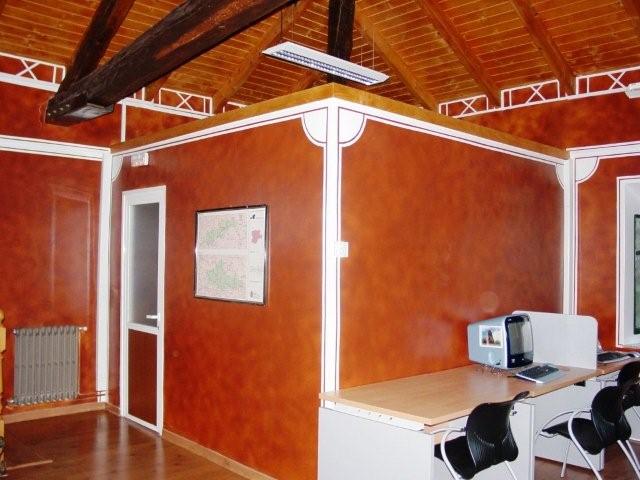
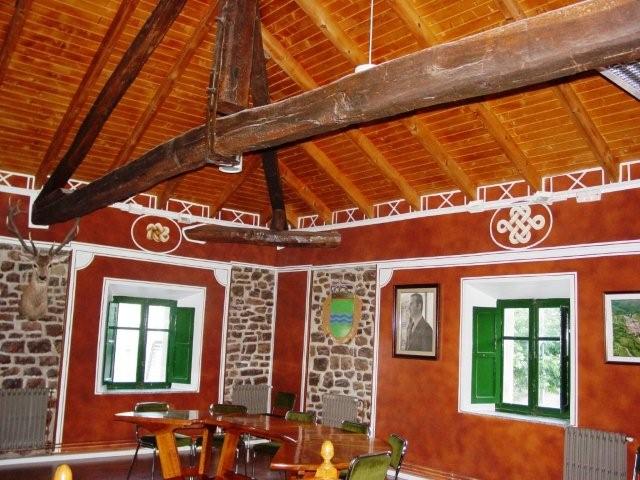
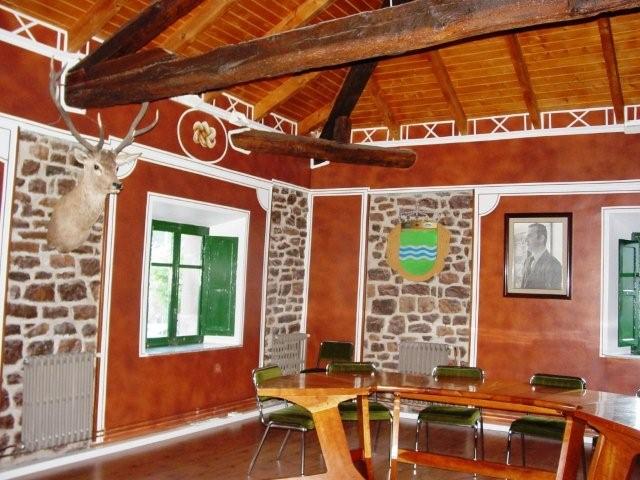
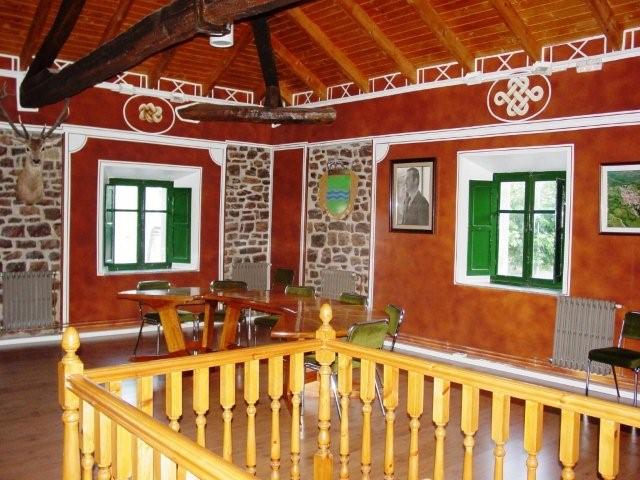
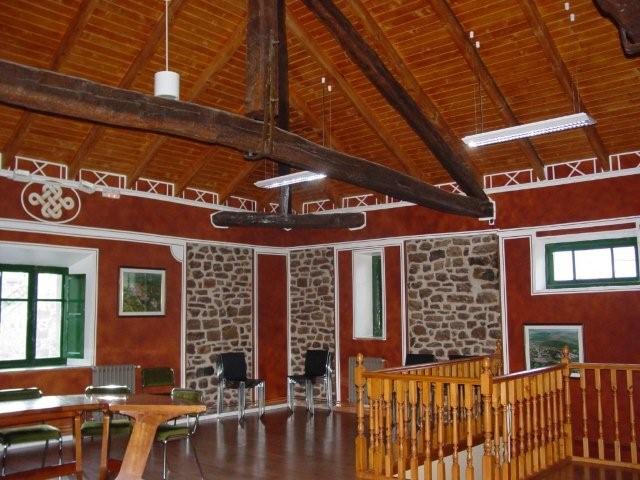
A partir del dia del fuero del año 2010 se inauguró la nueva sala de plenos del Ayuntamiento de Brañosera. En ella se puede ver la exposición de una reproduccion del Fuero del año 824.
The Role of Odds Formats in British Betting Culture, Explored on Betzella
Betting has been woven into British social life for centuries, but the way odds are displayed and understood has shaped that culture in ways that go far beyond simple arithmetic. The format in which a bookmaker presents its prices is not a neutral technical choice — it carries historical weight, reflects regulatory philosophy, and influences how bettors make decisions. Understanding why British punters read odds the way they do, and how that compares with the rest of the world, reveals something meaningful about the relationship between gambling, commerce, and tradition in the United Kingdom.
Fractional Odds and Their Deep Roots in British Gambling History
Fractional odds are the format most closely associated with British betting, and their dominance was essentially unchallenged for the better part of two centuries. The format expresses profit relative to stake: odds of 5/1 mean a £1 bet returns £5 profit plus the original stake, while 6/4 means a £6 profit for every £4 wagered. This system emerged organically from racecourse bookmaking, where odds were called out verbally and chalked onto boards at tracks like Newmarket and Epsom during the eighteenth and nineteenth centuries. The fractional format suited an environment where quick mental arithmetic and verbal negotiation were the primary tools of the trade.
The Betting and Gaming Act of 1960 was a watershed moment for British gambling. It legalised off-course cash betting shops for the first time, transforming a largely illegal street-level industry into a regulated high street presence. Firms like Ladbrokes, William Hill, and Coral expanded rapidly, and fractional odds moved from the racecourse into thousands of betting shops across the country. Because the format was already familiar to the betting public, there was no incentive to change it. Generations of British punters grew up reading fractions, and the format became culturally embedded in a way that was difficult to dislodge even when alternatives became available.
Fractional odds also have a particular vocabulary attached to them. Terms like «evens» (1/1), «odds-on» (any fraction where the denominator is larger than the numerator, such as 1/2), and expressions like «a pony on the nose» or «a score each way» form part of a betting argot that reinforces the cultural identity of the British punter. This linguistic dimension means that fractional odds are not simply a mathematical convention — they are a social one.
The Shift Toward Decimal Odds and the Digital Transition
The rise of online betting in the late 1990s and early 2000s created pressure to standardise odds formats across international markets. Decimal odds, which are standard across continental Europe and widely used in Australia, express the total return per unit staked rather than just the profit. A decimal price of 6.00 is equivalent to fractional 5/1, and 2.50 is equivalent to 6/4. The decimal format is mathematically simpler for calculating returns and comparing prices across multiple selections, which made it the natural choice for betting exchanges and online platforms targeting a pan-European audience.
Betfair, which launched in 2000 and fundamentally disrupted the traditional bookmaking model, used decimal odds by default. Because exchange betting required users to understand both backing and laying, the clarity of decimal pricing was a practical necessity. The exchange model also attracted a more analytically minded demographic of bettors who were comfortable with decimal notation. Over the following decade, most major UK online bookmakers introduced decimal as an option alongside fractional, and many began defaulting to decimal for new accounts.
The transition has not been seamless or complete. Many operators have found that older customers and those who primarily bet on horse racing still strongly prefer fractional odds. Research conducted by the Remote Gambling Association in the mid-2010s indicated that a significant portion of UK bettors over the age of 45 found decimal odds less intuitive when applied to horse racing markets specifically, even if they accepted the format for football accumulators. The cultural attachment to fractions in a racing context has proven particularly durable. Platforms that serve a broad demographic, including those operating on Betzella, have addressed this by offering user-configurable odds display settings, allowing bettors to choose the format that suits their background and preference rather than imposing a single standard.
American Moneyline Odds and Their Limited Penetration in the UK Market
A third format — American moneyline odds, also called plus/minus odds — has a minimal footprint in the British market despite the growing popularity of American sports among UK bettors. Moneyline odds express either how much profit a £100 bet would generate on a favourite (shown as a negative number, e.g. -150, meaning you must bet £150 to win £100) or how much profit a £100 bet on an underdog would generate (shown as a positive number, e.g. +200, meaning a £100 bet wins £200). The format is intuitive for American audiences but requires a different mental framework that most British punters have not grown up with.
The NFL, NBA, and MLB have all seen increased betting interest in the UK since the Gambling Act 2005 liberalised the advertising of betting services and allowed bookmakers to promote American sports markets more aggressively. Despite this, UK-facing sportsbooks have almost universally translated American sports odds into either fractional or decimal format rather than presenting moneyline prices. This is a deliberate commercial decision: introducing a third unfamiliar format would create friction in the user experience and potentially deter casual bettors from engaging with those markets. The practical result is that British punters betting on the Super Bowl or NBA Finals are reading prices in a format that was never designed with those sports in mind.
There is an argument that moneyline odds are actually better suited to certain types of betting markets, particularly those involving heavy favourites, because they avoid the awkward fractional expressions that arise when odds become very short. A price of 1/10 is technically accurate but communicates poorly to anyone trying to assess value quickly. The decimal equivalent of 1.10 is marginally clearer. The moneyline equivalent of -1000 is unambiguous in communicating the risk-reward profile. That this format has nonetheless failed to gain traction in Britain speaks to how strongly established conventions resist displacement even when alternatives offer genuine advantages.
Regulatory Dimensions and the Responsible Gambling Implications of Odds Formats
The Gambling Commission, which has regulated the British gambling industry since the Gambling Act 2005 came into force in 2007, has periodically examined whether odds presentation affects consumer understanding and, by extension, responsible gambling outcomes. The concern is not abstract: research from the University of Sydney and replicated in UK contexts has shown that bettors systematically misestimate their probability of winning when odds are presented in certain formats. Fractional odds, in particular, are associated with a tendency to overestimate the likelihood of success when prices are expressed as large fractions such as 10/1 or 20/1, because the numerator draws attention away from the implied probability.
The Gambling Commission’s 2019 review of online gambling consumer protection measures touched on transparency in odds presentation, though it stopped short of mandating a specific format. The review did recommend that operators provide clearer probability information alongside price displays, a suggestion that some platforms have implemented through percentage displays or visual probability indicators. The broader question of whether any odds format is inherently more or less likely to promote problem gambling behaviour remains open, with academic consensus still developing.
Betzella, like other operators serving the UK market, operates under the Gambling Commission’s licence conditions, which include requirements around responsible gambling tools, self-exclusion integration with the GamStop national scheme, and clear display of terms attached to promotional offers. The odds format question intersects with these obligations because any format that systematically obscures the true probability of an outcome could be considered inconsistent with the transparency requirements embedded in the Commission’s Social Responsibility Code. This has given operators a regulatory incentive, beyond the commercial one, to ensure that whichever format they use is presented with sufficient contextual information for bettors to make genuinely informed decisions.
The story of odds formats in British betting culture is ultimately a story about the friction between tradition and modernisation, between the cultural inheritance of the racecourse and the mathematical demands of the global digital marketplace. Fractional odds remain a living part of British betting identity, particularly in horse racing, while decimal odds have become the practical standard for a new generation of online bettors. The question of which format best serves bettors — not just commercially but in terms of genuine comprehension and responsible engagement — is one that regulators, operators, and researchers will continue to examine as the industry evolves. What is clear is that the numbers on a screen are never simply numbers: they carry the weight of history, habit, and the complex human psychology of risk and reward.
Horario de visitas guiadas en el ayuntamiento de Brañosera
Lunes / Viernes 10:00 / 14:00
Sábados, Domingos y Festivos 11:00 / 14:00
La nueva ubicación de los escudos recogidos hasta la fecha de los ayuntamientos asistentes al dia del fuero de años anteriores. Esta exposición se podrá visitar en horario de la oficina del Ayuntamiento, y en fines de semanas con cita previa llamando al teléfono del Ayuntamiento:
979 606277
Brañosera está situada al Noreste de la provincia de Palencia, en la Comunidad Autónoma de Castilla y León, a 1.220 metros de altitud, en plena Montaña Palentina, sobre el circo que originan las laderas de las Sierras de la Braña y la Cebollera, y en la margen izquierda del río Rubagón. Tiene una extensión de 3.095 Hectáreas, todas ellas rodeadas por bosques de roble y haya, con gran abundancia de flora y fauna.
Brañosera es la cabecera del Ayuntamiento que lleva su nombre al que también pertenecen Salcedillo, Valberzoso, Orbó y Vallejo de Orbó, con un total de 267 habitantes, población que se duplica y triplica en la temporada estival. Una de sus mayores riquezas se haya en sus inmensos pastizales y en la ganadería. En el subsuelo se encuentra carbón y canteras de piedra. En la actualidad el turismo es una fuente de ingresos.
Brañosera se ha visto afectada por la Ley 4/2000, de 27 de junio, de declaración del Parque Natural de Fuentes Carrionas y Fuente Cobre-Montaña Palentina (Palencia) y en la actualidad forma parte de dicho Parque Natural.
DESCRIPCIÓN GENERAL DEL MUNICIPIO Tiene 5 núcleos de población que son:
- Orbó: Pequeño pueblo ganadero de tan solo 7 habitantes. Situado a 1080 m. De altitud. Está a una distancia de 9 km de Brañosera
- Vallejo de Orbó: Tiene 64 habitantes y está a 1040 m. De altitud. Nació como colonia minera de las minas de Orbó y en la actualidad su mayor riqueza está encaminada al turismo
- Salcedillo: Pueblo cercano a Cantabria que tiene 44 habitantes. Es un pueblo eminentemente ganadero y montañés. Aquí el turista encontrará buen románico y un entorno natural, dominado por la pradería. Situado a 1244 metros de altitud.
- Valberzoso: Valberzoso está enclavado en la ladera Este del Cotejón y Cocoto, en un valle rodeado de bosques y praderías, a 1128 metros sobre el nivel del mar. Se llega a él por la carretera que une Barruelo de Santullán con Reinosa. Tiene 30 habitantes según datos del INE de 2006 Aula de la Naturaleza Para solicitudes e información: Servicio Territorial de Medio Ambiente. Avda. Casado del Alisal, 27 7ª Planta 34071 Palencia. 979.715.515
La distancia de Brañosera a las capitales más cercanas es: 118 Km a Palencia, 101 Km a Burgos, 90 Km a Santander, 168 Km a León.
Pero la distancia más relevante es la que le separa de Barruelo de Santullán, puesto que es en este municipio donde están los recursos más básicos para la población: Colegio, Farmacia, etc… y que es de 4 km aproximadamente
Brañosera: Capital del municipio, cuenta con 122 habitantes, según